
For a primary care office, the furniture should support more than just the daily tasks of administration. Employees need to work efficiently from well-organized workspaces with adequate storage, and patients and visitors need to sit comfortably in well-organized spaces that project a positive image of the office. For this recent office furniture installation project located in Kansas City, MO, we installed office furniture for workspaces and for areas where patients, visitors, and staff will be sitting, including desks, task chairs, filing cabinets and storage, guest chairs, lounge chairs, and occasional tables. The installation of this furniture highlights the importance of selecting furniture well for a healthcare workplace and then having it installed professionally.
Creating Efficient Administrative Workspaces
Desks and Storage Support Daily Office Responsibilities
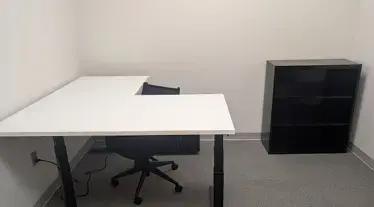
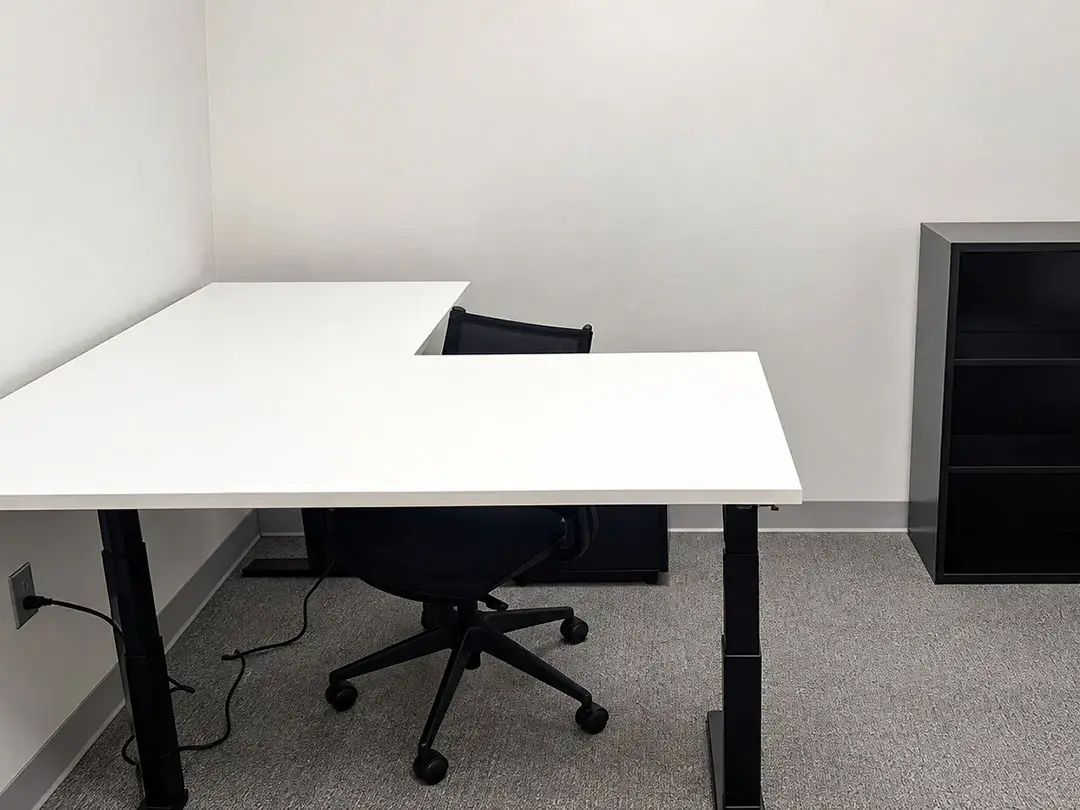
In most medical offices, administrative areas are minuscule, and thus we pay close attention to planning and placing furniture in these spaces. This private workspace includes a white L-shaped desk that provides the employee with a dedicated computer work surface as well as additional space to manage administrative functions. The configuration allows for ample workspace while enabling the employee to move about the space freely.
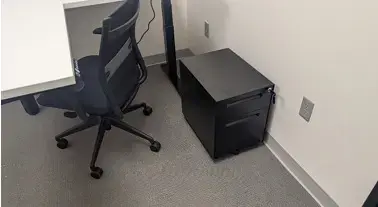
In addition to the workstation, we provided a black ergonomic task chair that enables users to work for long periods of time in comfort. A mobile pedestal has been placed nearby to store files and supplies, keeping essential items at hand without taking up space on the desk.
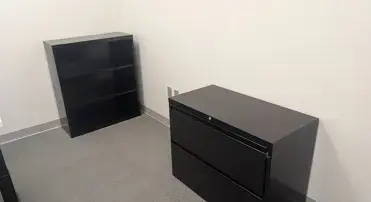
To support the additional black pieces for storage of documents and other materials, such as a lateral file and an open bookcase, these should be placed remotely from the main workstation to create an organized space whilst ensuring the storage is accessible.
Using Furniture to Make Better Use of Available Space
Many healthcare office spaces are composed of several different functional areas within a small footprint. The way that you arrange the furniture in these areas can greatly impact how they function.
Installing office furniture means more than just fitting individual items into a space. The final installed layout also takes into account the orientation of desks, sufficient clearance for chairs, placement of outlets and storage, as well as doors and paths of movement.
In this Kansas City primary care office, an L-shaped workstation is situated in a corner to utilize the space while keeping the rest of the area open. A mobile pedestal can sit close to an employee while still allowing for a task chair, whereas a bookcase and lateral file provide additional storage elsewhere in the office.
This type of planning creates a functional work space as opposed to a chaotic, crowded room.
Furnishing Patient and Visitor Areas
Comfortable Seating Contributes to the Office Experience
The patient-facing portion of a primary care office creates an important first impression. Furniture should be comfortable, appropriately scaled, and positioned so visitors can use the space naturally.
For this job, we supplied and installed a range of upholstered lounge chairs and sofas in a neutral color scheme. The modern seating provides the perfect place for patients and visitors to relax, with clean lines to complement the interior of the building.
A round occasional table with a dark pedestal base sits well within the space and provides a useful surface without dominating the floor and inhibiting circulation around the chairs.
This furniture allows for the definition of waiting areas and lounges and continues to convey a professional health care image.
Guest Seating Adds Flexibility Throughout the Office
Simple Seating Works Well for Short Visits
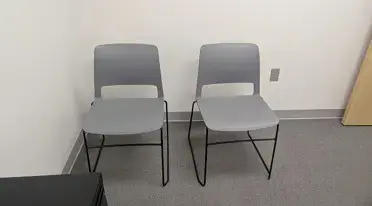
The seating project included gray guest chairs with slender black legs. These chairs are suitable for occasional use by visitors to a home, by patients in a clinic or hospital, and by staff members in an office or in meetings for short periods of time.
Guest chairs are often used in private offices, consultation rooms, and other administrative areas. Because guest chairs are smaller than lounge chairs, they can be used in large numbers in smaller spaces without taking over the room.
Even simple seating deserves some thought as to where it is placed within a room. Chairs should not block doors, interfere with storage, or create narrow paths through a room, and allowing adequate space between items creates an orderly appearance and gives the impression that the room has been thoughtfully planned.
Professional Installation Supports Healthcare Workplaces
A medical office is typically a hybrid of types of furniture to support the employees that work in the space as well as the patients and visitors. Administrative personnel require ergonomic task seats with ample work surfaces, filing, and storage. Patients and visitors need comfortable sitting areas throughout the space and areas for gathering in close proximity.
A coordinated installation of different furniture categories as used in individual rooms throughout a facility. Instead of ordering and placing individual items such as desks, chairs, file cabinets, and tables, furnishings are considered in their overall function within a room and throughout a facility.
We pay close attention to issues such as alignment, stability, clearances, and final placement. A professional office furniture installation should leave all areas fully ready for use as areas for employees or patient waiting areas.
Office Furniture Installation Services
Healthcare facilities, professional offices, and other commercial organizations can benefit from experienced installers who understand the requirements of multi-room furniture projects. Our office furniture installation services include professional assembly and placement of desks, workstations, seating, conference furniture, storage systems, reception furnishings, and other commercial office furniture.
Frequently Asked Questions
What types of furniture can be installed in a medical office?
From simple configurations of private offices and administrative workstations to complete healthcare workplace settings, which include guest chairs, filing cabinets and bookcases, reception seating and lounge seating, and a host of other workplace furniture items, our professional installers will assemble and position all in your desired configuration.
Why is professional office furniture installation important in smaller rooms?
Smaller rooms require careful furniture positioning to maintain usable work areas and comfortable circulation. Professional installation can help account for chair clearance, storage access, doors, electrical connections, and other features of the room.
Can office furniture installers furnish both employee and patient areas?
Yes. A commercial furniture project can include administrative workspaces as well as waiting rooms, consultation areas, reception spaces and other areas that patients come into contact with.
How should furniture be positioned in a primary care office?
Furniture placement should reflect how each room is used. Desks and storage should support employee workflows, while patient seating should provide comfortable access without restricting pathways or entrances.
A Functional Primary Care Workplace in Kansas City
We provided office furniture installation for this healthcare project to support both patients and employees in a single setting. Our selection of workstations and storage, along with guest chairs and lounge seating, created efficient administrative areas as well as comfortable areas to receive patients and conduct business in the primary care area. Careful assembly and placement of each piece of furniture was critical to create a highly functional and beautiful primary care office.
Contact Quality Installers
When your healthcare facility, medical practice, or professional office needs new furniture professionally assembled and positioned, we are ready to coordinate the project from installation through final placement. Contact Quality Installers in Kansas City, MO, to discuss your office furniture installation needs and prepare your workplace for employees, patients, and daily operations.